New Hand Tools

Like most new jewelers, I bought some jeweler’s hand tools years ago when I was first starting out. They were pretty cheap and basic, and they worked okay. But I recently wondered if I couldn’t come up with something better. I was a blacksmith for many years, (I was the editor for ABANA’s Hammer’s Blow from 1999-2009) and toolmaking is a big part of that job, so it not a foreign concept to me. Plus I have a large sheet of scrap brass that I’ve been hauling around for years, so I thought it would be good to use it for something useful. And I really enjoy making and using nice, handmade tools.

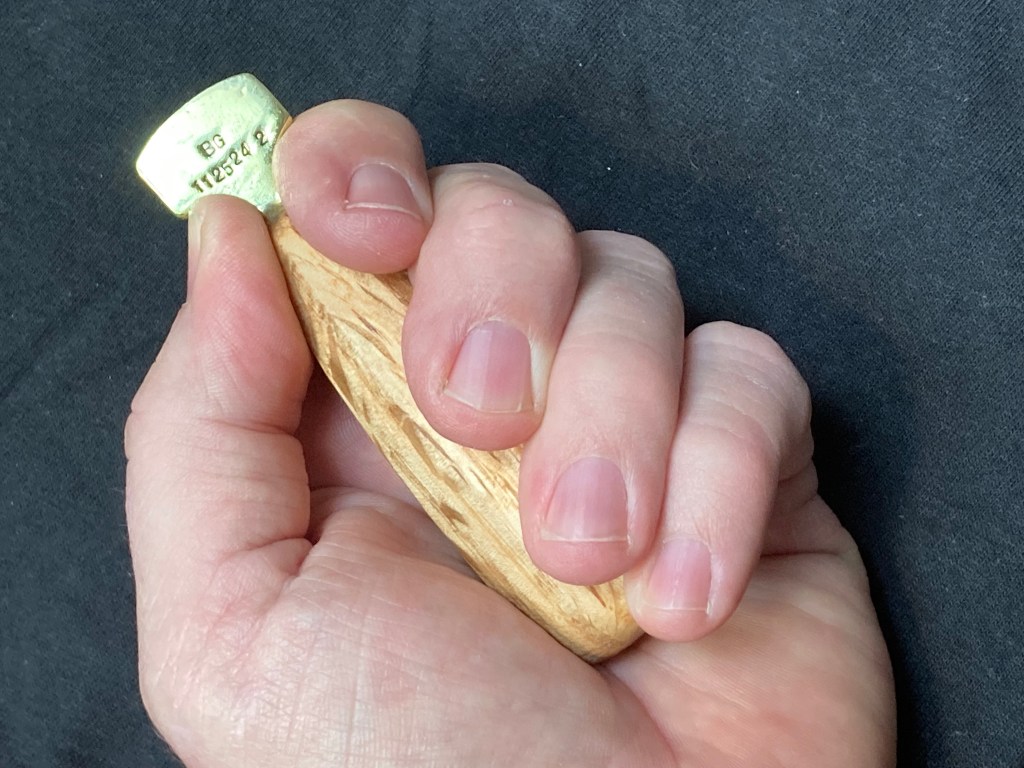
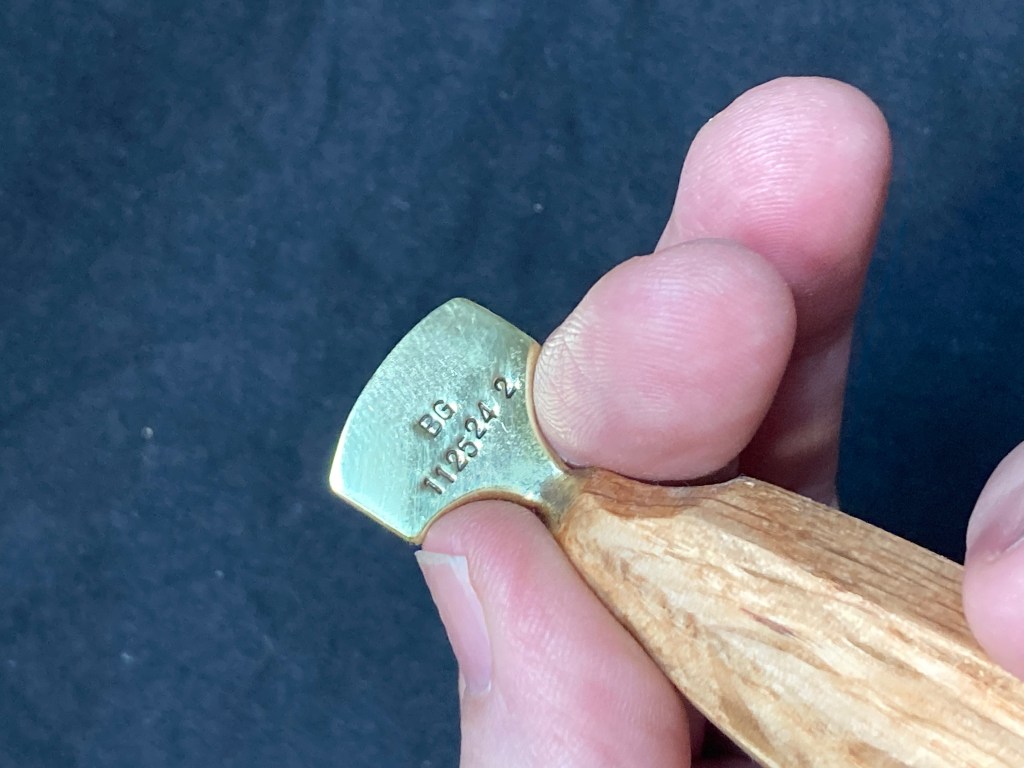
My first concept was an improved bezel roller. The cheap chinese ones work, but the steel heads are rather small and prone to slipping and scratching the steel. I designed a larger, wider head, with curved edges at the back that allows your fingers to comfortably work closer to the head. All the sharp edges were sanded over, and I put a high polish on them with a buffing wheel.
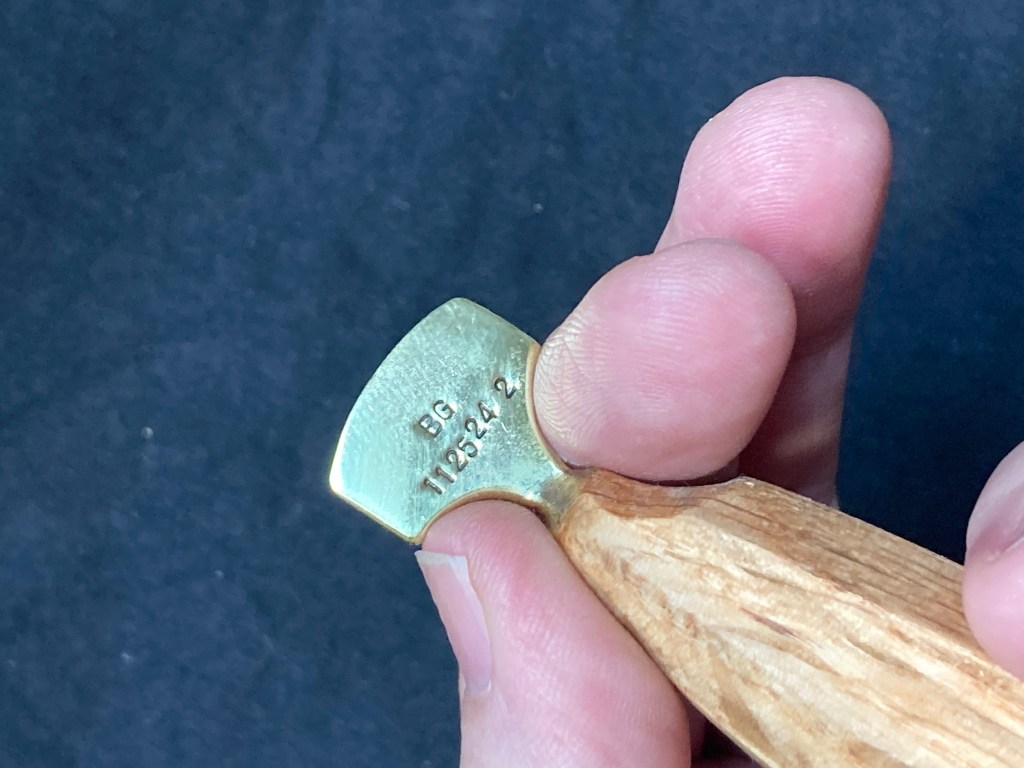
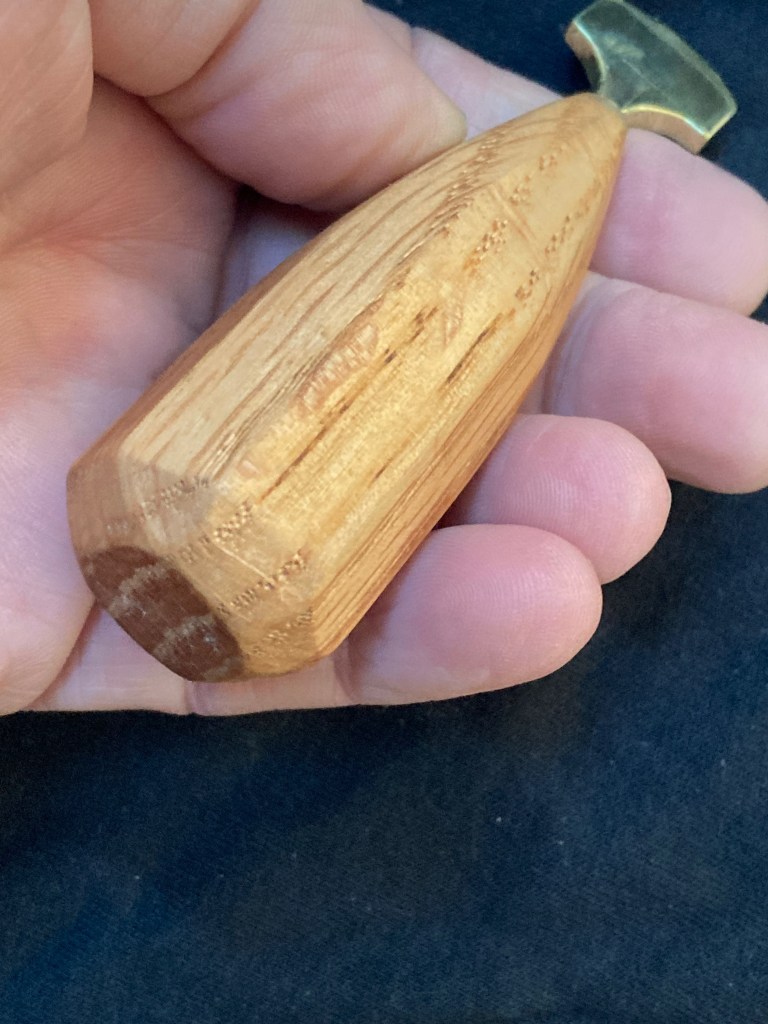
I also redesigned the handles. Most, if not all, of the bezel handles you see are turned on a lathe… not because it’s the best way to do it, but because it’s cheap to mass-produce wooden parts on a lathe. I prefer octagonal handles- the flats give you a much better rotational grip, it’s comfortable to use in your hand, and it’s less likely to roll off your bench. I make these in two styles… one is asymmetrical, and the other is more teardrop-shaped. Both work well, it’s more a matter of personal preference. All my tools are “signed” and numbered, just like the jewelry that I make. I sell these for $24 each plus $5 shipping.

The wood that I’ve been using is mostly oak, and the beauty of these tools’ small size means that I can mostly use scrap wood. The very first batch of tools that I made had white oak handles recycled from a discarded bed frame. I’ve also made a bunch from willow oak. This is a nice, tight-grained hardwood that isn’t commercially available… but I have a willow oak tree in our front yard. Whenever I prune it, I set aside a few pieces. These handles are a perfect use for them. They tend to be a little more figure to the grain, with small knots throughout, but I think it adds interest. Recently, though, I bought a small box of hardwood scrap from a cabinet shop. It contains some nice cherry, maple, and walnut, so I’ll be making some handles from these woods in the near future.
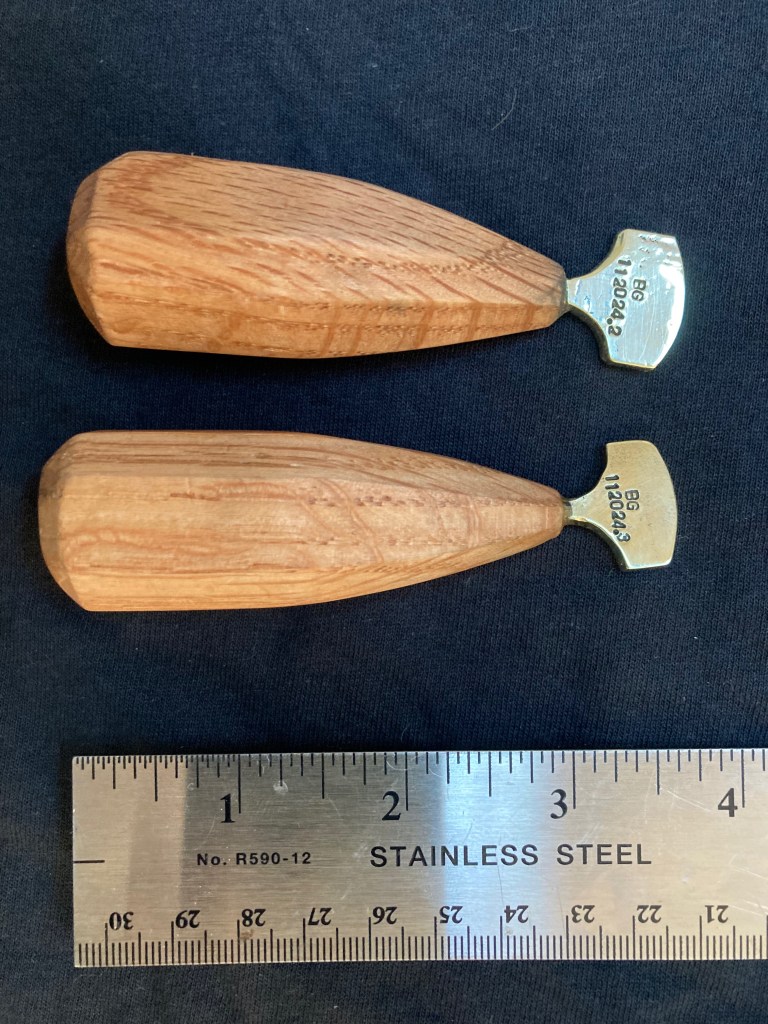
Some of the first bezel rollers that I made, these have symmetrical white oak handles

The next group of tools I decided to try was pushers. These are typically made of steel, but I wanted brass. Brass is softer than steel, and it takes a very nice high polish. Prong pushers have a shallow notch in the tip, and bezel pushers have a flat. Teardrop handles seem to be best for this style of tool. Since the tool is simpler, these are a bit cheaper at $21 each plus $5 shipping.
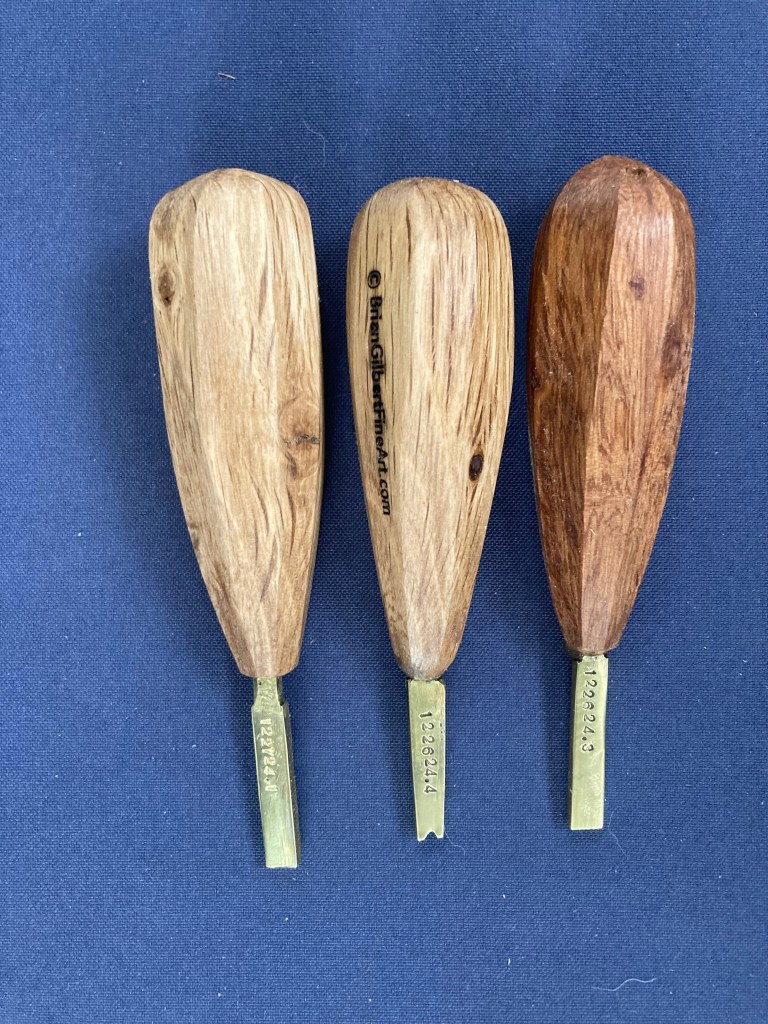
Brass pushers- a notched prong pusher is in the middle, the others are flat pushers

My third group of tools is a bit of a secret weapon. It’s also a bezel roller, but instead of brass, I’ve used aluminum. The aluminum is soft… much softer than silver. And as a result, the face of the tool gets dented and marked with use. The advantage, though, is that the soft tool doesn’t mark the silver- it marks the tool- and the tool rarely slips. The face of the tool is easily renewed with a few swipes of a sanding stick, if necessary. Even though it’s soft, it lasts a long time. I’ve been using an aluminum bezel roller for a few years now, and mine still performs as good as when it was first made. To be fair, I’m not a production jeweler and don’t set dozens of stones per day… a brass roller might be better in that situation. But I do like the way it performs. These are available at $21 each, plus $5 shipping.
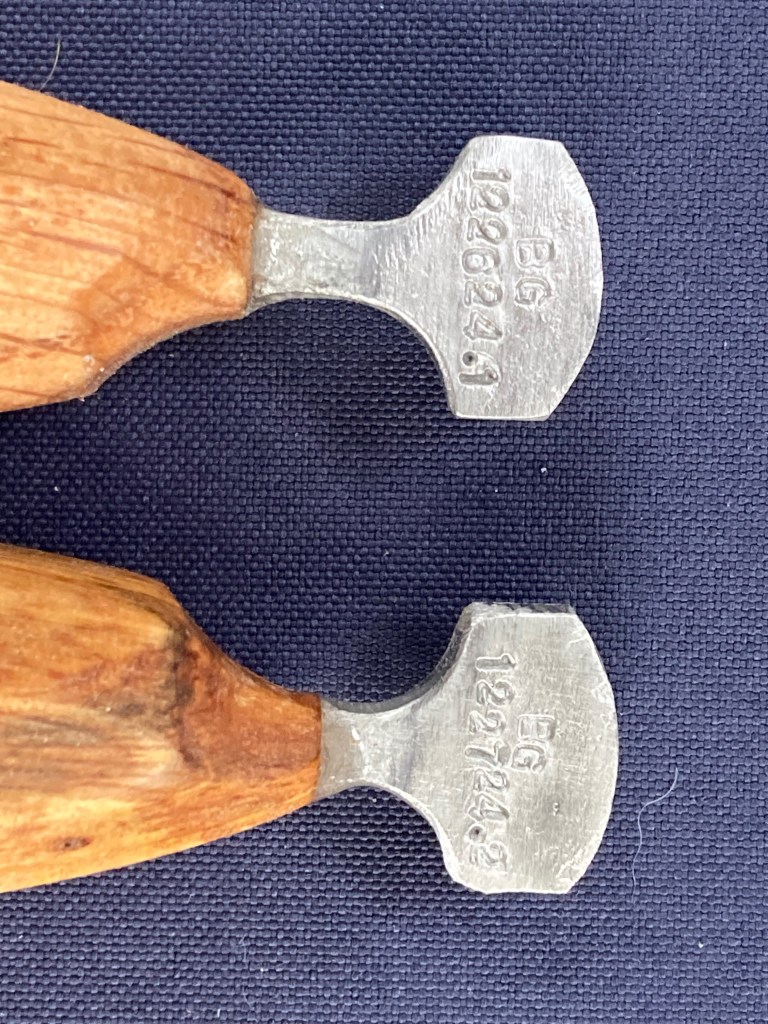
Aluminum- headed bezel rollers

I do have yet a fourth group of tools, but this one really is a secret. I’m not going to make these available until I at least get a copyright filed (I’m doubtful about a patent for these. MAYBE they could be patented, but that’s a very expensive process. And at $24 a pop, I’d have to sell a ton of these before I could afford the filing fees. Copyright registration is a much simpler and less expensive, and though the protection is much more limited, it’s better than nothing. Watch this space, more info is coming soon!
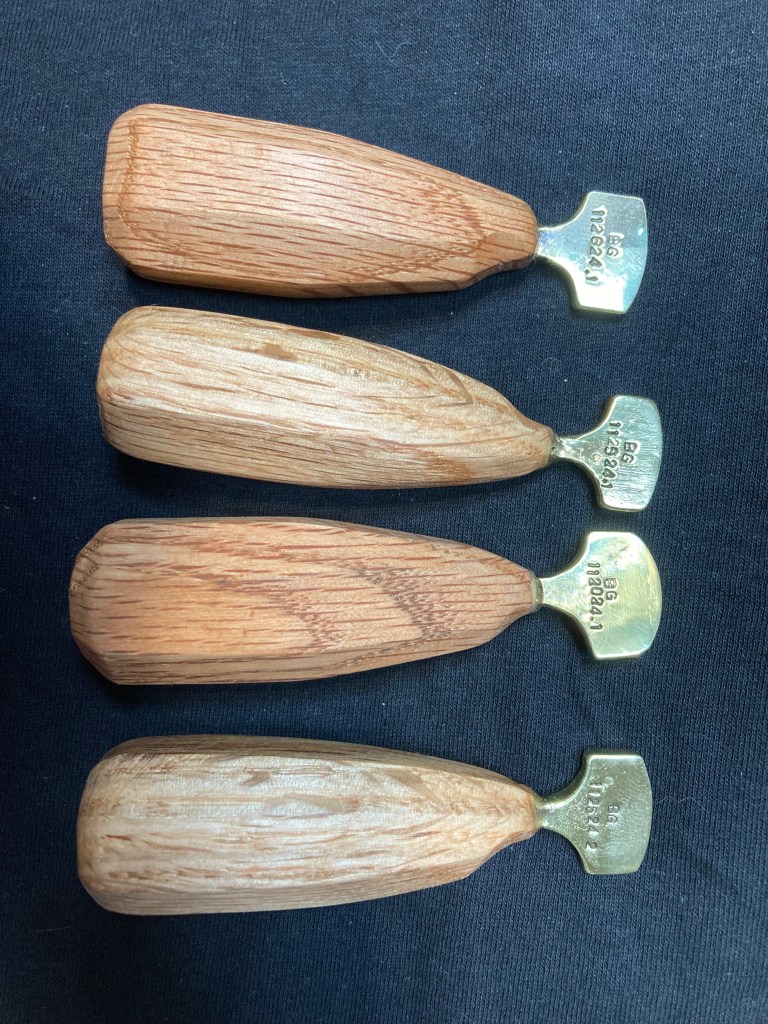
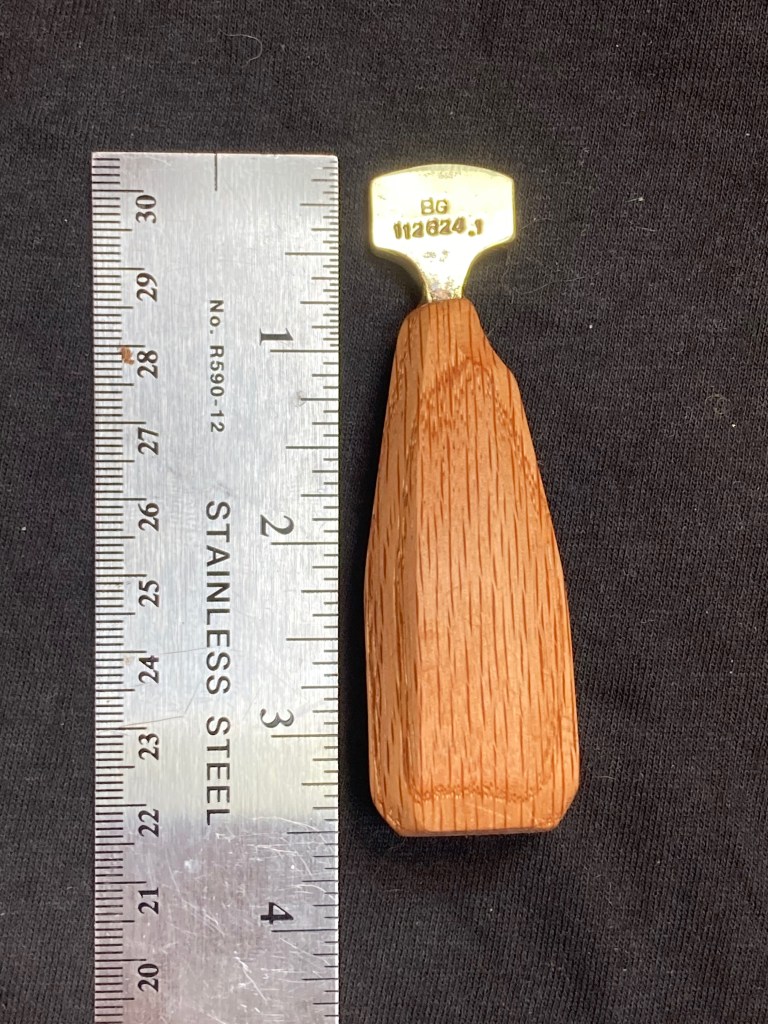
Handmade Brass Bezel Rollers


I’ve recently started making bezel rollers for sale. These have oversize brass heads for an increased “sweet spot” on the faces, which measure around 20mm x 3.5mm (made from 1/8″ thick brass stock). The heads are curved at the back so that you can more comfortably place your fingers directly behind the heads, which give you more control over the tool. The handles are also handmade- these are from oiled white oak (recycled from discarded furniture) but I also have some sustainably-harvested willow oak as well (prunings from the tree in my front yard). They’re octagonal, which is very pleasant to hold, and the facets provide rotational resistance. They are made short to allow the heel of your palm to wrap the tool. Each one is signed and numbered. Since these are one-off, handmade items, they aren’t nearly as cheap as the typical six-buck Chinese item… about 4x more at $24, plus $5 shipping), but they’re made to last. I can also make a custom size handle to better fit your hand… I’m a not-large guy with smaller-sized hands, so these are a pretty average fit. PM me if interested… suggestions for improvement are welcomed!

A Necklace For My Sister

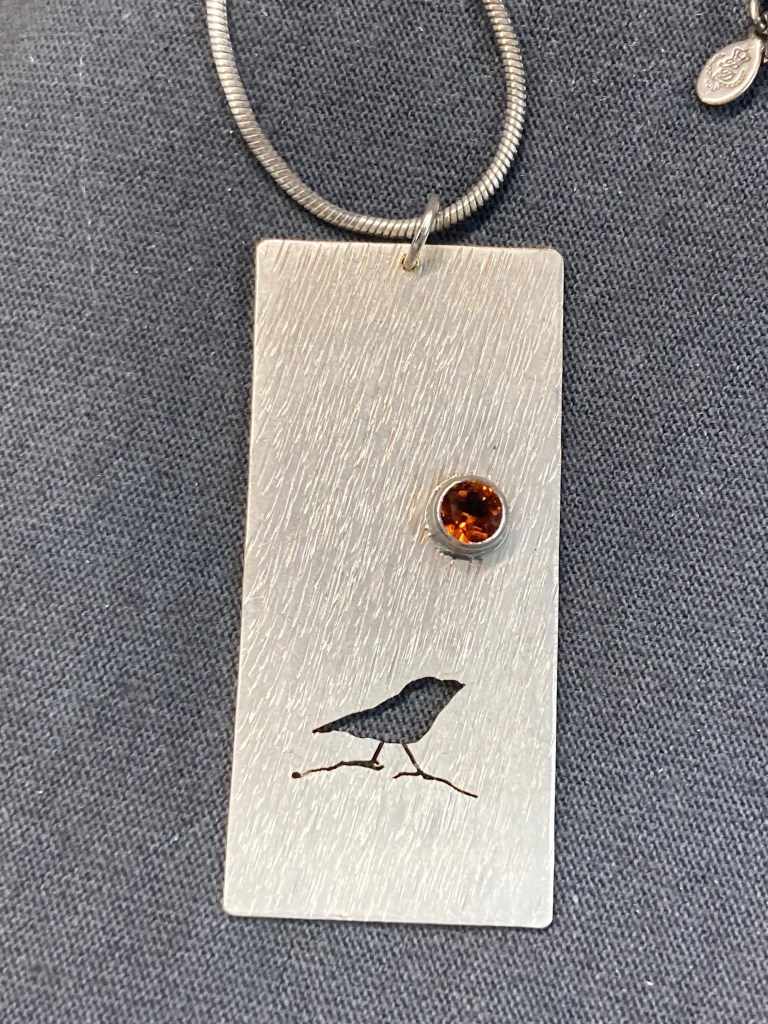
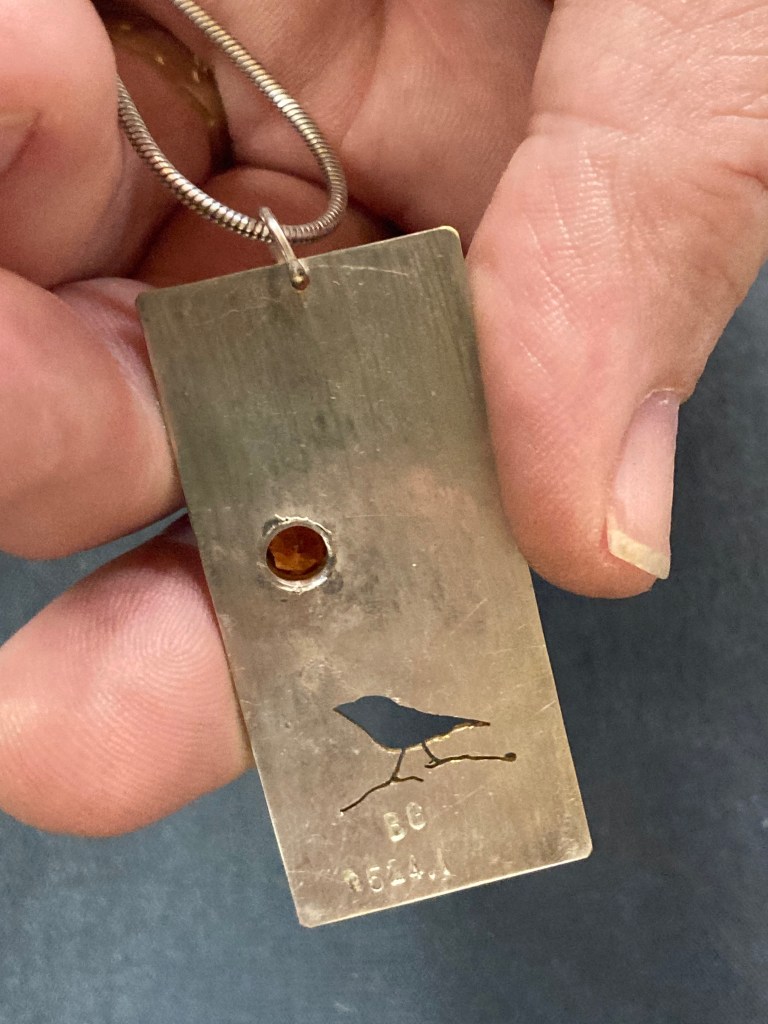
I designed this necklace during an Advanced Metals class I recently completed from the City Of Savannah. My sister is an avid birder in the Pacific Northwest, and has one wild bird that will come when called for food. It’s a simple pierced and sawn profile in silver plated brass, with a 5mm Madiera citrine.

Madeira citrine is a scarce quartz gemstone with a deep golden-brown color that ranges from honeyed orange to bronzed brown. It’s named after the (rather tasty) fortified wine from the Madeira Islands off the coast of Portugal, which has a similar color range. The word “Madeira” is a Brazilian Portuguese word that means “wood” or “wood colored”.

The surface is textured with fine random chisel lines that evoke the idea of a rain shower. While it was rather time consuming to make, I’m pleased with the result… so much so that I several other designs on my bench right now. The next one will be a profile of a swallow, which is inspired by a recent trip to Lisbon, Portugal. Swallows are a popular design motif there, and stylized ceramic swallows appear as a decoration on the sides of buildings.

Opal rough

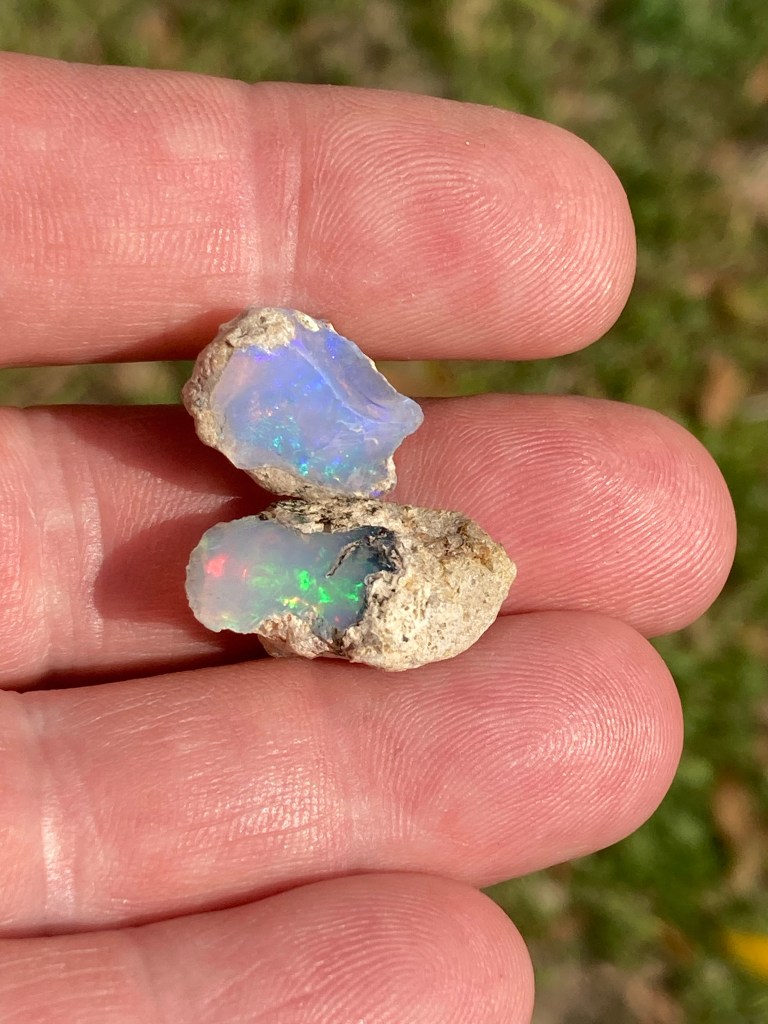
I received a package in the mail yesterday from my dear sister. She was fortunate enough to attend the Tucson gem and mineral show this year, and she sent along a group of stones. Among them was this beautiful pair of Ethiopian opal rough stones.

Opal rough from the Tucson Gem and Mineral Show

These are by far the best pieces of opal that I have in my stash. Normally my opals- most of which come from Lightning Ridge in Australia- have a very thin layer of color, covered on top and bottom with a layer of base rock. The rock has to be very carefully cut away to show the color, and it’s very easy to cut all of the color away. It’s a common occurrence to spend an hour cutting a stone, only to find there’s no color in it.

These stones, by contrast, are both solid color all the way through. They should be a breeze to cut… the hardest part will be deciding which face to flatten for the back, since the colors will look beautiful on all sides.

Look for more on these stones in the coming months as they’re cut and set into necklaces. I almost always set opals into necklaces, since they are soft stones and easily damaged with normal wear when set into a ring.

Rainbow Quartz Necklace

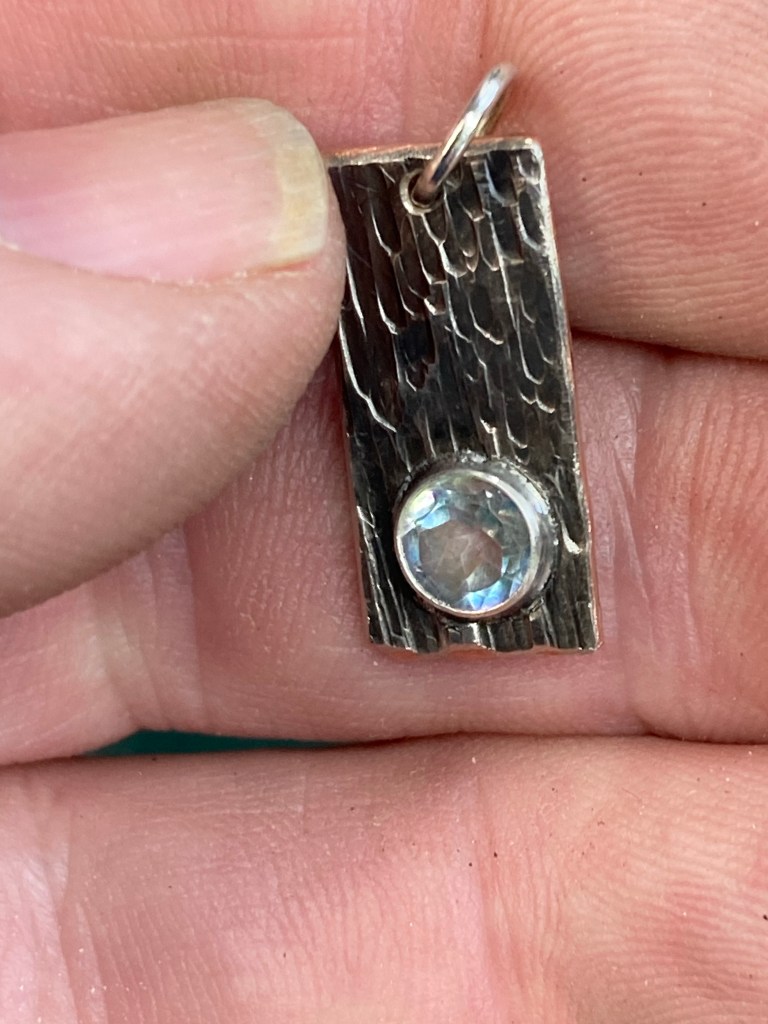
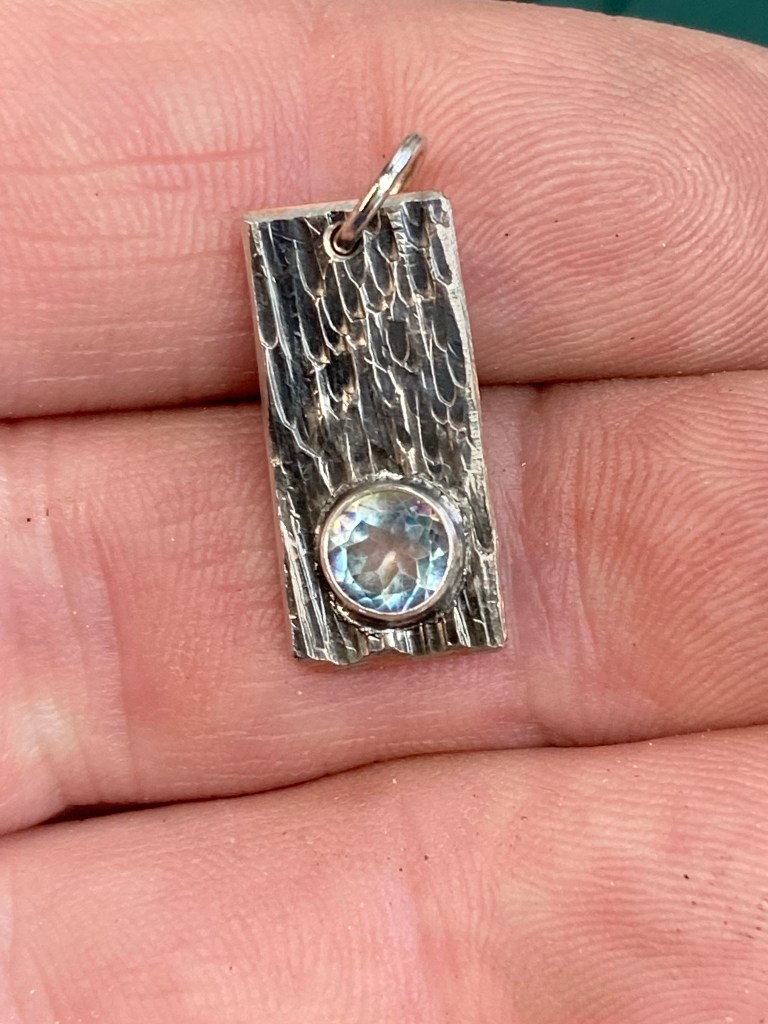
Just completed this morning, #21623.1, a nickel on copper rectangular necklace measuring 24mm x 9mm. It has a hot forged textured surface with a dark lustrous oxidized finish. The stone is a 5mm rainbow quartz weighing about .70 cts. Rainbow quartz isn’t a completely natural stone… quartz is naturally colorless. The colors come from vacuum deposition layers of niobium and titanium.

This one is a first for me as it features a fully fabricated silver tube setting, as opposed to the settings I normally use, which come pre-fabricated and ready to set. It’s definitely more work, but this way I can adjust the height of the setting to better fit the piece. Available with a chain for $60, or without a chain for $45.(sold)

Ruby Necklace

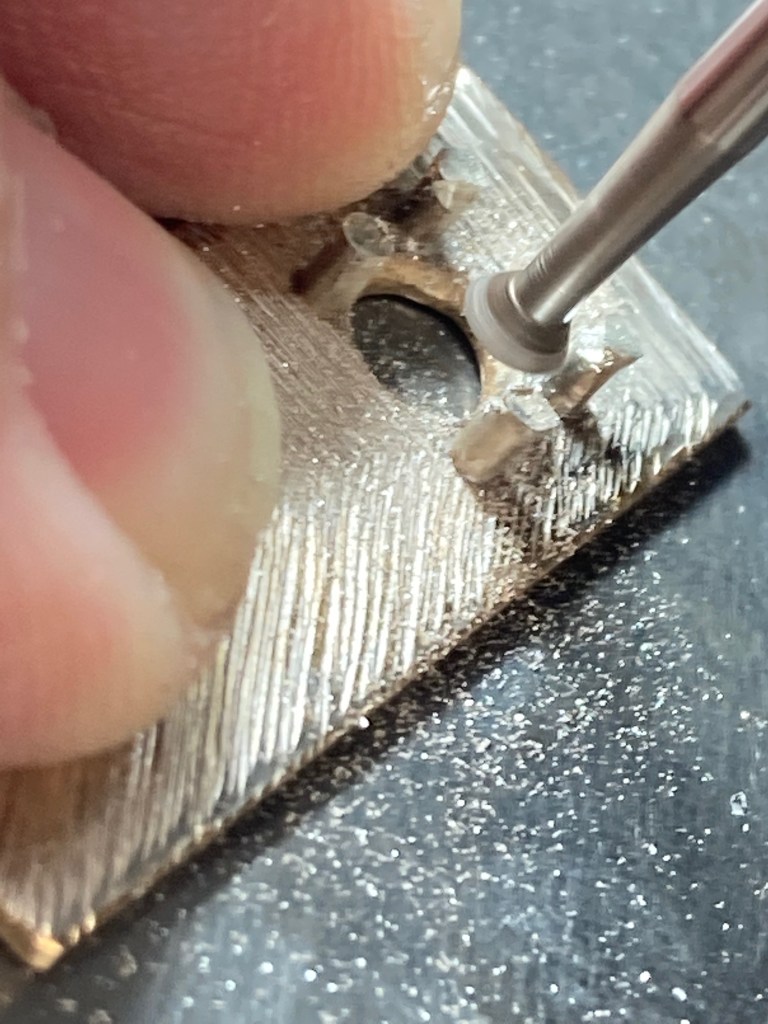
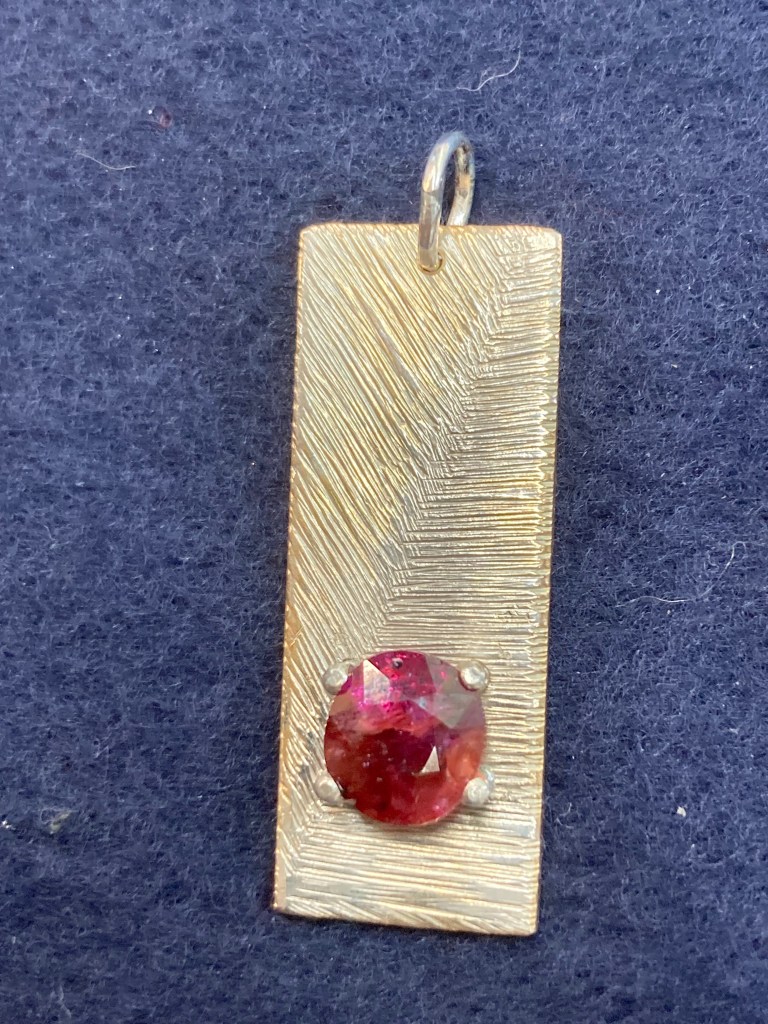
Here’s a recently completed 1.64ct oval ruby set in a rectangular silver in copper pendant. The setting features four individually soldered fine silver prongs. These were rounded over with cup burrs, and the notches that hold the stone were cut with hart burrs.

This stone is a particularly interesting case- I have confidence that it’s genuine, bought from one of my regular suppliers, and it’s clearer than the other rubies that I have. But I suspect that it is flawed. You can’t see it under normal light, but with a strong sidelight you can see a reflection that suggests an internal crack in the stone… not a continuous fracture through the entire gem, but a partial break. In this case that’s a good thing… a ruby of this size and color would easily cost me $2,900, and I wouldn’t want to mess with such an expensive stone. This stone cost much less- I can set it without it causing myself an ulcer- yet it’s still very beautiful, and it is a real ruby. The new owner may need to treat it a little gently- like, don’t go whacking it with a hammer or anything-, but it held up under the pressure of setting with flying colors. This necklace is available at the time of writing at $360.

The completed ruby necklace #82422.1, $360

Beryl Necklace

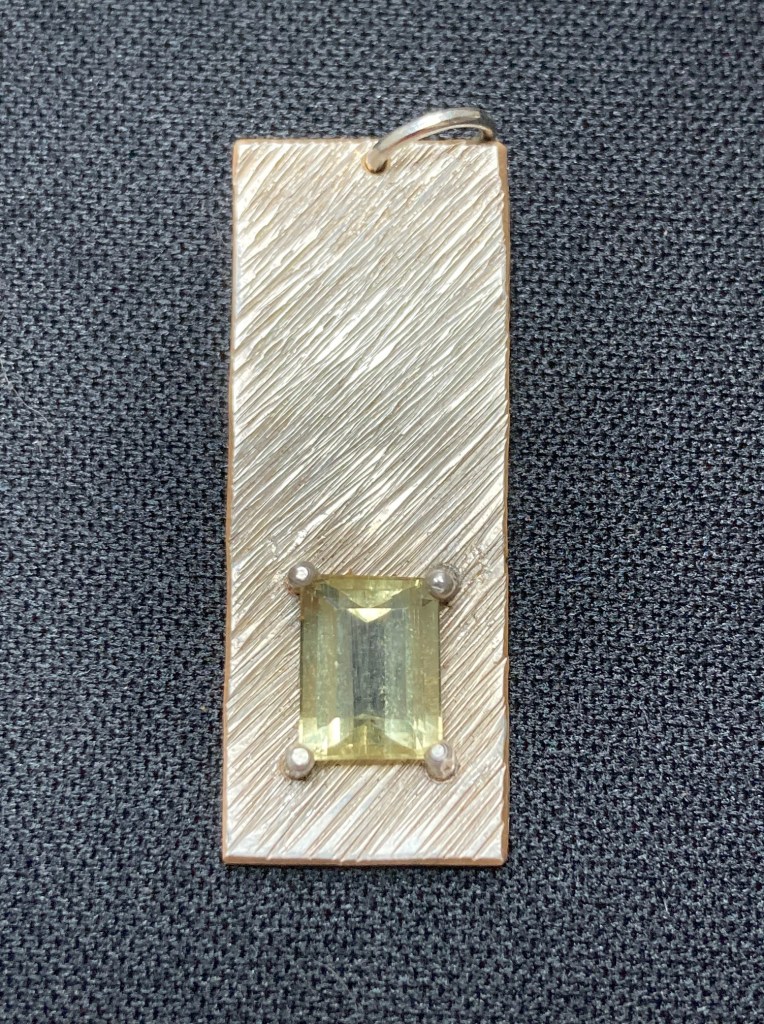
This necklace, #72822.1, was a bit of a training exercise for me. It features a rectangular 6x9mm pastel yellow green beryl weighing 1.49 carats. The difficult part was the corner prong mounts. These are built from half-hard fine silver wire, with notches cut for the stone with a small hart burr. In order to securely hold the stone, they were cut in a sort-of cup shape using a smaller diameter burr, resulting in a notch that is curved rather than straight. This cradles the corner of the stone, and it also protects the corners from wear.

The back is my favorite sterling silver on copper plate. The edges of this piece will darken with time, eventually turning a golden color. This piece may contain nickel, and shouldn’t be worn by folks with a nickel allergy. As with all of my jewelry, a little rub with some silver polish every now and again will keep the shine.

Pastel yellow green beryl necklace, 1.49 ct, #72822.1
Detail of the stone
The same piece from the back. When space allows, all my jewelry is signed and numbered. I intentionally left the solder areas around the prongs, both for strength and to emphasize the handmade nature of the piece.

#EarringsForUkraine

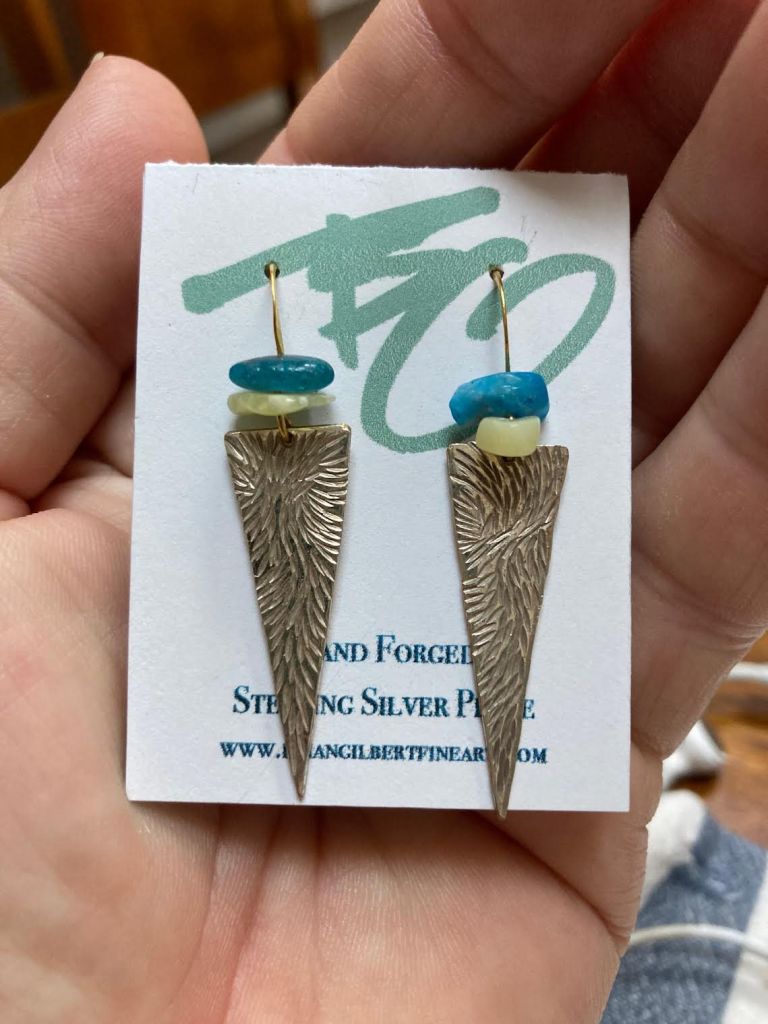
With all the pain and suffering in the Ukraine, I very much wanted to help somehow. With that in mind, here is my new earring design. They feature natural apatite and soo chow jade beads to represent the blue and yellow of the Ukrainian flag over a hand cut swirl design that suggests the chaos that the Ukrainian people are experiencing right now. Soo Chow Jade isn’t a true jade, but is actually a type of serpentine, a magnesium silicate that is commonly used as a jade alternative. Apatite is a naturally occurring gemstone, largely unknown to the general public but sought by collectors and appears different colors, mainly blues, pale aqua, greens and yellows. The most common gem variety is a translucent to transparent semiprecious gemstone that is steadily increasing in popularity. Faceted apatite gemstones are not often seen for sale, but not horribly expensive when they are.

These earrings sell for $40 per pair plus $5 for shipping. Like many of my designs, these are made with plated silver on copper, and shouldn’t be worn by anyone with a nickel allergy. These can be made from pure .999 silver, but the cost is higher- contact me if you’d like a custom pair.

I have a friend in Ukraine named Olga Polobutko, she and her husband Sergi live in western Ukraine. She is organizing support for the resistance, and to help her, I am donating 25% of all sales of this design directly to her- as long as she can still receive Paypal or Venmo.

Show your support by posting a photo under the hashtag #EarringsForUkraine, and don’t wear them in Moscow- I’ve heard stories of the police harassing people with anything yellow and blue.

#EarringsForUkraine, $40 plus $5 shipping.

Damascus Steel Bolo Tie

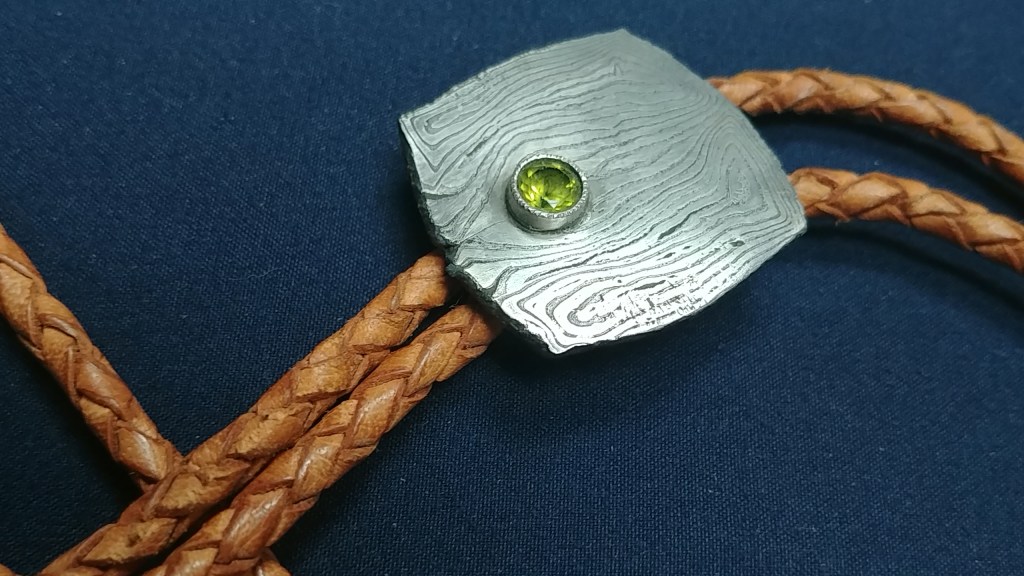
This is an older piece that I created some time ago. It’s undated, but it would have been around 2006-2007. I made it for an art show, and I still wear it on special occasions. It features a forge-welded damascus steel base with a 6mm aquamarine set in a fine silver tube setting, braided leather chord with silver tips.

#aquamarine

#briangilbertfineart

#damascusjewelry

#bolotie

Damascus bolo tie, 2007 by Brian Gilbert